This semester at Eng102 class was a very enjoyable experience for me. I had the most fun than any other previous English class I had experienced here at La Guardia. When I first sat down in class for the first time I had thought what type of writing us (students) were expected to do. Learning it was the "Super Natural" theme, I found it very exciting because themes like Greek Mythology, Angels and Demons, Vampires and Werewolves were fun topics I could talk freely about in my writing. I then thought of my youngest sister who is currently a high school freshman at Long Island City High School. She loves to read books such as the Harry Potter series and is a huge fan of the Super Natural. I would recommend this class to her if she ever considers to take an English class here at La Guardia. Talking back about me again, my first blog opened the door of myself that connected me with the other students. I then read from other students and learned that each introduction was a different story. Reading from their first blogs, I learned a little bit about their personalities through their writing style.
My second blog started the real work in class; I had to choose a poem of my own choice and the first thing that had popped into my mind was Greek mythology. I wanted to find a poem that would talk or relate to the heroes, gods and goddesses that were so famous and exciting to read about. I chose Ares because he was the type of god who would always have his way of doing things and he loved to partake in battles for senseless fun and I thought that was cool. The other reason was that there was a popular video game that is still popular in the series. That game is “God of War” and playing that game for the first time was an insane experience. It was brutal, gory and it did bring me fear seeing how I slaughtered mythologcial monsters but as I continued on the game grew on me and I saw myself being the hero on a very important quest. Which then brings up to my next fun experience that I had learned in this class called the 'Hero's Quest'.
The other theme we worked on in class that was really interesting to me was the Hero's Quest. In class we had watched an animated film, by the famous Japanese director Hayao Miyazaki, called 'Spirited Away'. I actually very much enjoy Japanese anime culture and famous action hero films that exist in Japan. For our own choice in choosing a hero’s quest film, I had chosen to write about a heroic Japanese film called “Azumi”. She is the lone female assassin that actually survives all the trials and challenges that her fellow male assassins could not. She is the unlikely sexy heroine that would take on an entire army of soldiers and bandits in order to save japan from another war that has brought devastation upon many people. Using 'Monomyth' or the 'Hero's Journey' helped me to analyze the film by seeing the story into specific stages that lead to the hero surpassing or transcending his/ her former self. Learning this helped me to analyze heroic films even differently than i had seen them before.
For one of the last few blogs i had worked on the end of the semester was a short story called the "Tell Tale Heart". In this Engish class, I had also learned topics related to the field of Psychology and before I thought that studying the field would make a person go crazy but I see now that the topic is indeed very interesting. we learned about the Carl Jung's 'Shadow' and Sigmund Freud's 'Psychoanalytical Criticism'. Working on my short story has piqued my interest to learn more about psychology and what goes on inside the mind of people that are suffering mentally. Back again to my short story, Using psychoanalysis helped me to get some kind of psychological ideas that perhaps drove the narrator to go insane such as him denying that he is a mad crazy person. He is in self denial. The fact that he can be able to tell a story openly to his audience through the story and being able to describe every action is indeed quite insane. I think I will consider to study psychology since it seems to me a very interesting topic to learn from seeing that it is also still a new field to science.
My overall experience here in this class was indeed fun and i had met many interesting people that came with their own ideas.
Monday, June 14, 2010

Wednesday, June 2, 2010
Blog 15: Final Draft

The author of the short story Edgar Allan Poe, was born on January 19, 1809 and died on October 7, 1849. His parents had died when he was very young, thus he became an orphan, but was later adopted into the Allan family by John and Frances Allan. Poe was an American writer, poet, and journalist; he is considered to be a member and part of the American Romantic movement. He had struggled financially and had earned his living by writing essays and short stories from which he earned very little. Poe died from unknown causes due to brain congestion, drugs, alcohol, heart disease, suicide, and other unknown factors that could've led to his death. His early experiences with death and the passing of many close people to him may be the result of his own psyche going insane.
In "The Tell-Tale Heart" the story is told by an unknown narrator. He is actually the Protagonist and the Antagonist in this story. To further explain this, he is both the victim and the predator of his own actions. He plots to kill the Old Man being the predator and becomes the victim of guilt when he hears the sound of his own heart beat. Perhaps an even better interpretation is that the narrator is his own worst enemy in the sense that he is always having conflicts within himself. At first, in the beginning of the tale, he claims that he harbors no ill will towards the Old Man and he is always kind to him. The only thing that disturbed him was the "Vulture eye" the Old Man possessed. The narrator states, “Whenever it fell upon me, my blood ran cold; and so by degrees – very gradually – I made up my mind to take the life of the old man, and thus rid myself of the eye forever.” This can explain the inner feelings of loath and disturbed hate he had for the Old Man.
Much earlier in the opening of the story, the narrator claims that he is indeed very nervous but not does not consider himself to be mad but only having sharp "Acute" senses because of "The disease". This disease he speaks of is probably a disorder known as Neurosis. "Neurosis is a class of functional mental disorders involving distress but neither delusions nor hallucinations, whereby behavior is not outside socially acceptable norms. This disorder is also known as psychoneurosis or neurotic disorder" (Wikipedia). The narrator seems to be suffering from this severe disease yet claims that it has made him aware of all things.
After eight consecutive nights, the narraor calmly waits in the darkness... like a shadow stalking the Old Man in his sleep. Waiting for the opportunity to murder him but ultimately to eliminate his eye. When he succeeds and murders the Old Man, he disposes the body by dismembering the corpse and hides it underneath a wooden plank. He finally feels that all is well and solved. He does not regret or even consider the event that just happened then policemen arrive for an inspection. The narrator gladly welcomes the policemen and displays his confidence yet after their long stay he suddenly becomes paranoid because he hears the sound of a beating heart. The noise haunts him as the sound gets louder and louder until he is no longer able to contain his guilt and at last confesses to the policemen by revealing all that has really happened and that he was actually the murderer.
The field of Psychology was established by an Austrian psychoanalyst named Sigmund Freud; he is the founding father of the field and has written many theories concerning the functions and thoughts of a person’s psyche. According to Wikipedia, "Psychoanalytic Literary Criticism is the literary approach where critics see the text as if it were a dream. The process of changing from latent to manifest content is known as the dream work" (Wikipedia). The hidden message in the text lies latent and it is the critic’s job to unravel the mystery by identifying the symbolism and language used in arriving at the true content.
The article Unconscious Mind, "While past thoughts and memories may be deleted from immediate consciousness, they direct the thoughts and feelings of the individual from the realm of the unconscious". This quote explains the narrator's unconscious feelings towards the old man himself because he was driven to the limit of going mad that because of the old man's eye he had decided that he should be put to death.
One of the main symbols appearing in this story is the "Vulture Eye", The narrator explains how it deeply disturbs him as he gazes upon it and that it is a sight that makes his blood run cold. According to a website enotes.com, the vulture eye symbolizes the coming of death. The vulture is a huge flying bird and is the predator circling around a sickly animal or persons waiting until it dies so that it can consume the corpse. Therefore, the Old Man was nearing his death as he was watched from behind the shadows. Many other symbols appearing in the story are shadow, death, corpse, and heart. In Shadow Psychology from Wikipedia, "The shadow is a part of the unconscious mind consisting of repressed weaknesses, shortcomings, and instincts". This in general can explain the person's most personal and inner feelings and our strong feelings usually cannot be openly expressed. However in the dream world, all feelings and strong desires can be fulfilled and expressed beyond the ordinary limits in the real world. One of the most well known psychologists, Carl Jung, notes that "the shadow sometimes overwhelms a person's actions; for example, when the conscious mind is shocked, confused, or paralyzed by indecision".
Works Cited
Holman and Snyder. “Edgar Allan Poe” About.com. web. 25 May 2010Poe, Edgar. “The Tell-Tale Heart” PoeStories.com. web. 25 May 2010
“Psychoanalytic Literary Criticism” Wikipedia. 29 March 2010. web. 25 May 2010
“Shadow (Psychology)” Wikipedia. 20 May 2010. Web. 25 May 2010
Image Link: http://ckim112689.files.wordpress.com/2007/05/45850529_d2a10ad7ce.jpg
Blog 14: Stronger revision on blog 13
I believe that I must put more focus into the interpretation of symbols using psychoanalysis instead of just what the general meaning for it could be in the online dictionary of symbolism. I think using other related topics such as shadow psychology and neurosis will help further develop my essay.
Tuesday, May 25, 2010
Blog 13 : Full Draft
The author of the short story Edgar Allan Poe, was born on January 19, 1809 and died on October 7, 1849. His parents had died when he was very young, thus he became an orphan but was later adopted into the Allan family by John and Frances Allan. Poe was an American writer, poet, and journalist; he is considered to be part of the American Romantic movement. He had struggled all his life financially and had earned his living by writing essays and short stories which had earned him very little. Poe died from unknown circumstances due to brain congestion, drugs, alcohol, heart disease, suicide, and the list goes on. His experiences with the deaths of many close people to him may be the result of his own psyche going insane.
In The Tell-Tale Heart the story is told by an unknown narrator. He is actually the Protagonist and the Antagonist in this story. To further explain this, he is both the victim and the predator of his own actions. He plots to kill the Old Man being the predator and becomes the victim of guilt when he hears the sound of heart beating . At first in the beginning of the tale, he claims that he harbors no ill will towards the Old Man and he is always kind to him. The only thing that disturbed him was the "Vulture eye" the Old Man possessed. The narrator states, “Whenever it fell upon me, my blood ran cold; and so by degrees – very gradually – I made up my mind to take the life of the old man, and thus rid myself of the eye forever.” This can explain the inner feelings of loath and disturbed hate he had for the Old Man.
Much earlier in the opening of the story, he claims that he is indeed very nervous but not does not consider himself to be mad only having sharp "Acute" senses because of "The disease". This disease he speaks of is a disorder known as Neurosis. Neurosis is a class of functional mental disorders involving distress but neither delusions nor hallucinations, whereby behavior is not outside socially acceptable norms. This disorder is also known as psychoneurosis or neurotic disorder (Wikipedia). The narrator seems to be suffering from this severe disease yet claims that it has made him aware of all things.
After 8 consecutive nights, silently he still waits like a shadow looking over the Old Man in his sleep. Waiting for the opportunity to murder him but ultimately to eliminate his eye. When he succeeds and murders the Old Man, he disposes the body by dismembering the corpse and hides it underneath a wooden plank. He finally feels that all is well and solved. He does not regret or even consider the event that just happened then policemen arrive for an inspection. The narrator gladly welcomes the policemen and displays his confidence yet after their long stay he suddenly becomes paranoid because he hears the sound of a beating heart. The noise haunts him as the sound gets louder and louder until he is no longer able to contain his guilt and at last confesses to the policemen by revealing all that has really happened and that he was actually the murderer.
The field of Psychology was established by an Austrian psychoanalyst named Sigmund Freud; he is the founding father of the field and has written many theories concerning the functions and thoughts of a person’s psyche. According to Wikipedia, Psychoanalytic Literary Criticism is the literary approach where critics see the text as if it were a kind of dream. The hidden message in the text lies latent and it is the critic’s job to unravel the mystery by identifying the symbolism and the language used and arrives at the true meaning.
In Psychoanalytic Criticism, this specific literary approach is how critics interpret literature as dreams. The text represses its real or latent content behind obvious content (Wikipedia), therefore in dreams they can be expressed as some sort of outlet to lessen the actual reality that occurs in the real world itself. The process of changing from latent to manifest content is known as the dream work (Wikipedia). In the article Unconscious Mind, "While past thoughts and memories may be deleted from immediate consciousness, they direct the thoughts and feelings of the individual from the realm of the unconscious". This quote may be able to explain the narrator's unconscious feelings towards the old man himself because he was driven to the limit of going mad that because of the old man's eye he had decided that he should be put to death.
One of the main symbols appearing in this story is the "Vulture Eye", the narrator explains how it deeply disturbs him as he gazes upon it and that it is a sight that makes his blood run cold. According to a website enotes.com, the vulture eye symbolizes the coming of death. The vulture is a huge flying bird and is the predator circling around a sickly animal or person waiting until it dies so that it can consume the corpse. Therefore, the Old Man was nearing death as he was soon to fall victim before the narrator. Many other symbols appearing in the story are shadow, death, corpse, and heart. In Shadow Psychology from Wikipedia, the shadow is a part of the unconscious mind consisting of repressed weaknesses, shortcomings, and instincts. This in general can explain the person's most personal and inner feelings and our strong feelings usually cannot be openly expressed, however in the dream world, all feelings and strong desires can be fulfilled and expressed beyond the ordinary limits in the real world. One of the most well known psychologists, Carl Jung, notes that "the shadow sometimes overwhelms a person's actions; for example, when the conscious mind is shocked, confused, or paralyzed by indecision".
Works Cited:
Holman and Snyder. “Edgar Allan Poe” About.com. web. 25 May 2010
Poe, Edgar. “The Tell-Tale Heart” PoeStories.com. web. 25 May 2010
“Psychoanalytic Literary Criticism” Wikipedia. 29 March 2010. web. 25 May 2010
“Shadow (Psychology)” Wikipedia. 20 May 2010. Web. 25 May 2010
Monday, May 17, 2010
Blog 12: Initial pre-writing
The Tell-Tale Heart
The short story The Tell-Tale Heart by Edgar Allan Poe, is a short horror story first published in January of 1983. This short story is one of the most familair stories I have read from Edgar Allan Poe's collection of short horror stories since middle school. From start to finish I find that it is chilling and disturbing how the story unfolds from sanity to the insanity of the narrator's mind. For my analysis and interpertation of the story I will use the Psychoanalytic Literary Criticism to further explain the events, thoughts, and the possibilites of interpreting the narrator's mind. With that said, the story is narrated by the unreliable narrator (himself), who explains the events of how he carefully calculates the murder of the old man who possess an evil eye he calls " The Vulture Eye".
According to the narrator himself, he claims in the beginning that he is very nervous but not mad because if he were he would be unable to tell his story to us (the audience). The narrator waits silenty like a shadow as the old man sleeps looking for an open opportunity to murder him but ultimately his eye. After the murder he disposes of the body by dismembering the corpse and hiding it underneath a wooden plank. He feels that all is well and solved but his confidence dissipates as the policemen come for an inspection after their long stay at the narrator's house. The narrator switches from his confidence and then becomes paranoid because he hears the sound of a beating heart. The noise haunts him as the sound gets louder and louder until he is no longer able to contain his guilt and at last confesses to the policemen by revealing all that has really happened and that he was actually the murderer.
One of the main symbols appearing in this story is the "Vulture Eye", the narrator explains how it deeply disturbs him as he gazes upon it and that it is a sight that makes his blood run cold. According to a website enotes.com, the vulture eye symbolizes the coming of death. The vulture is a huge flying bird and is the predator circling around a sickly animal or person waiting until it dies so that it can consume the corpse. Therefore, the Old Man was nearing death as he was soon to fall victim before the narrator. Many other symbols appearing in the story are shadow, death, corpse, and heart. In Shadow Psychology from wikipedia, the shadow is a part of the unconscious mind consisting of repressed weaknesses, shortcomings,and instincts. This in general can explain the person's most personal and inner feelings and our strong feelings usually cannot be openly expressed, however in the dream world, all feelings and strong desires can be fulfilled and expressed beyond the ordinary limits in the real world. One of the most well known psychologists, Carl Jung, notes that "the shadow sometimes overwhelms a person's actions; for example, when the conscious mind is shocked, confused, or paralyzed by indecision". When the narrator found the Old Man's eye open as he slept he all of a sudden lept and suffocated him to death.
In the analysis of Psychoanalytic Literary Criticsm, this literary approach is how critics interpret literature as dreams.The text in literature is actually hiding its true content or desires, therefore in dreams they can be expressed as some sort of outloet to lessen the actual reality that occurs in the real world itself. From the wikipedia in the article Unconscious Mind, "While past thoughts and memories may be deleted from immediate consciousness, they direct the thoughts and feelings of the individual from the realm of the unconscious". This quote may be able to explain the narrator's unconscious feelings towards the old man himself because he was driven to the limit of going mad that because of the old man's eye he had decided that he should be put to death.
Links:
http://en.wikipedia.org/wiki/Unconscious_mind
http://en.wikipedia.org/wiki/Psychoanalytic_criticism
http://en.wikipedia.org/wiki/Shadow_(psychology)
http://en.wikipedia.org/wiki/The_Tell-Tale_Heart
http://www.enotes.com/tell-tale-heart/q-and-a/what-might-vultures-eye-symbolize-59725
The short story The Tell-Tale Heart by Edgar Allan Poe, is a short horror story first published in January of 1983. This short story is one of the most familair stories I have read from Edgar Allan Poe's collection of short horror stories since middle school. From start to finish I find that it is chilling and disturbing how the story unfolds from sanity to the insanity of the narrator's mind. For my analysis and interpertation of the story I will use the Psychoanalytic Literary Criticism to further explain the events, thoughts, and the possibilites of interpreting the narrator's mind. With that said, the story is narrated by the unreliable narrator (himself), who explains the events of how he carefully calculates the murder of the old man who possess an evil eye he calls " The Vulture Eye".
According to the narrator himself, he claims in the beginning that he is very nervous but not mad because if he were he would be unable to tell his story to us (the audience). The narrator waits silenty like a shadow as the old man sleeps looking for an open opportunity to murder him but ultimately his eye. After the murder he disposes of the body by dismembering the corpse and hiding it underneath a wooden plank. He feels that all is well and solved but his confidence dissipates as the policemen come for an inspection after their long stay at the narrator's house. The narrator switches from his confidence and then becomes paranoid because he hears the sound of a beating heart. The noise haunts him as the sound gets louder and louder until he is no longer able to contain his guilt and at last confesses to the policemen by revealing all that has really happened and that he was actually the murderer.
One of the main symbols appearing in this story is the "Vulture Eye", the narrator explains how it deeply disturbs him as he gazes upon it and that it is a sight that makes his blood run cold. According to a website enotes.com, the vulture eye symbolizes the coming of death. The vulture is a huge flying bird and is the predator circling around a sickly animal or person waiting until it dies so that it can consume the corpse. Therefore, the Old Man was nearing death as he was soon to fall victim before the narrator. Many other symbols appearing in the story are shadow, death, corpse, and heart. In Shadow Psychology from wikipedia, the shadow is a part of the unconscious mind consisting of repressed weaknesses, shortcomings,and instincts. This in general can explain the person's most personal and inner feelings and our strong feelings usually cannot be openly expressed, however in the dream world, all feelings and strong desires can be fulfilled and expressed beyond the ordinary limits in the real world. One of the most well known psychologists, Carl Jung, notes that "the shadow sometimes overwhelms a person's actions; for example, when the conscious mind is shocked, confused, or paralyzed by indecision". When the narrator found the Old Man's eye open as he slept he all of a sudden lept and suffocated him to death.
In the analysis of Psychoanalytic Literary Criticsm, this literary approach is how critics interpret literature as dreams.The text in literature is actually hiding its true content or desires, therefore in dreams they can be expressed as some sort of outloet to lessen the actual reality that occurs in the real world itself. From the wikipedia in the article Unconscious Mind, "While past thoughts and memories may be deleted from immediate consciousness, they direct the thoughts and feelings of the individual from the realm of the unconscious". This quote may be able to explain the narrator's unconscious feelings towards the old man himself because he was driven to the limit of going mad that because of the old man's eye he had decided that he should be put to death.
Links:
http://en.wikipedia.org/wiki/Unconscious_mind
http://en.wikipedia.org/wiki/Psychoanalytic_criticism
http://en.wikipedia.org/wiki/Shadow_(psychology)
http://en.wikipedia.org/wiki/The_Tell-Tale_Heart
http://www.enotes.com/tell-tale-heart/q-and-a/what-might-vultures-eye-symbolize-59725
Monday, May 10, 2010
Blog 11: My Chosen Story
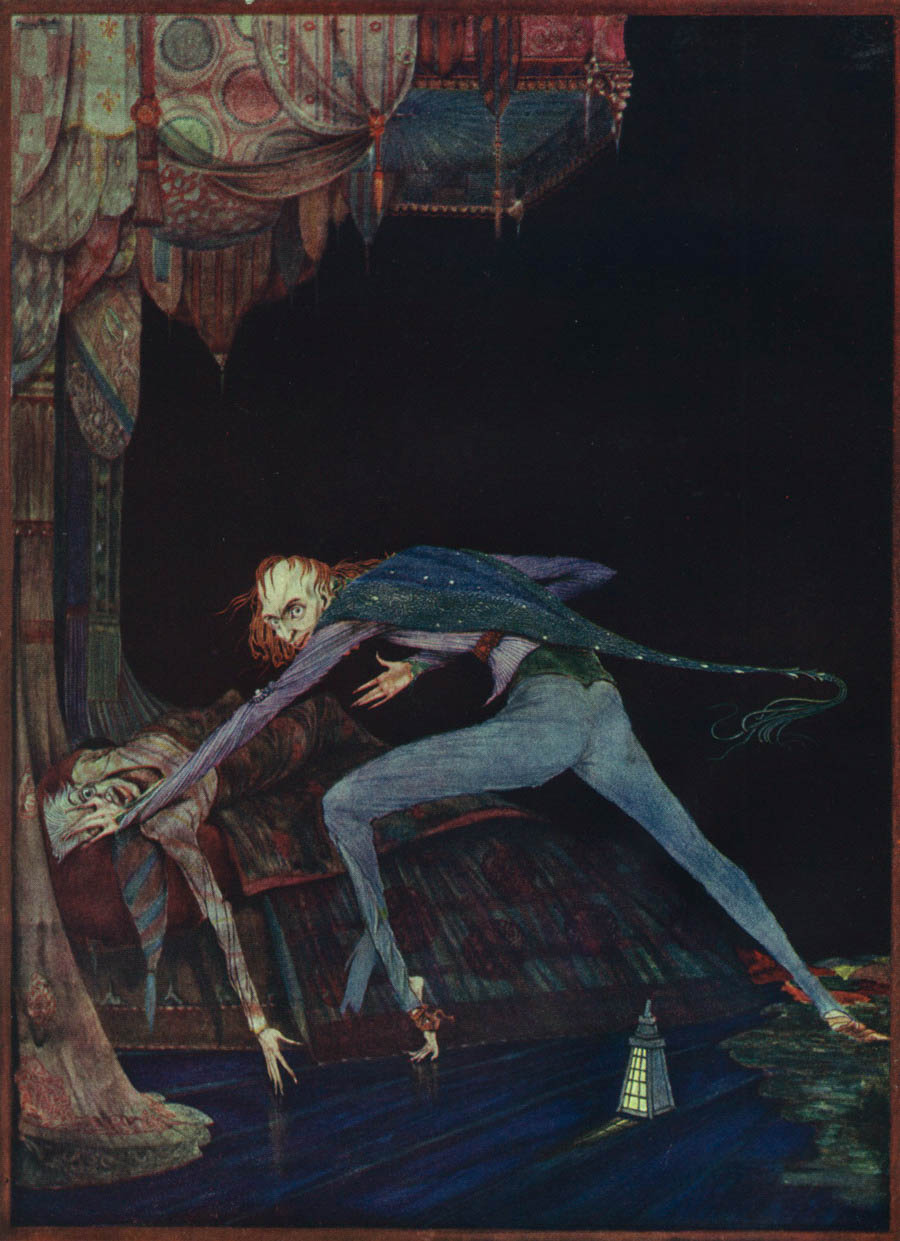
The Tell-Tale Heart by Edgar Allan Poe
For this assignment, I have chosen to do an analysis on the title: The Tell-Tale Heart by Edgar Allan Poe. I have chosen this short horror-fiction story because I am familiar with reading the story before and the story itself really gives off creepy and eerie feelings while reading it. The basic plot of the story tells of a man (the narrator) who goes insane after murdering an old man with a vulture eye. He hides the dead body under the floor boards and as time passes he becomes paranoid and in his thought he is haunted by the sound of heartbeating where he has hidden the old man. In my interpretation, the story itself is disturbing in how the narrator describes his thoughts and actions of how he carefully plans the murder of the old man. For the specific approach, I will use psychoanalytic criticism to further analyze the narrator's thoughts of how he may have felt when encountering the old man and perhaps his subconscious played the significant role which led him to kill the old man. According to the wikipedia, psychoanalytic criticism can yied useful clues to the sometime baffling symbols, actions, and settings in a literary work. In addition to that, this literary approach is where critics see the text as if it were a kind of dream. This approach may be able to help me in understanding what goes in the narrator's mind and why he feels guilt towards his actions in the end.
External Links:
http://en.wikipedia.org/wiki/The_Tell-Tale_Heart
http://poestories.com/read/telltaleheart
http://en.wikipedia.org/wiki/Psychoanalytic_criticism
Image link:
http://upload.wikimedia.org/wikipedia/commons/4/43/Clarke-TellTaleHeart.jpeg
Tuesday, May 4, 2010
Blog 10: Reflection

Image Link: http://images.fanpop.com/images/image_uploads/Drakengard-2-drakengard-798973_1024_768.jpg
Subscribe to:
Comments (Atom)